Many rehab teams want robotic gait training, but the real problem starts after that. They must choose between very different systems with different costs, staffing needs, and clinical roles.
A gait exoskeleton, a Lokomat-style system, and a treadmill gait trainer each fit different rehab goals. Overground exoskeletons often suit flexible ward use and lower budgets. Treadmill-based systems suit highly structured repetitive training. The right choice depends on patient mix, space, staffing, and purchasing priorities.

I have seen this question come up in almost every serious hospital discussion. A department rarely asks us, “Should we buy an exoskeleton at all?” The better question is, “Which form of robotic gait training fits our ward, our staff, and our budget?” That is the question I will answer here. If you are building a rehab technology roadmap, this comparison can save you from a costly mismatch.
What Are the Three Main Technologies?
Many buyers compare these systems as if they were direct substitutes. That creates confusion because each technology was built around a different training model.
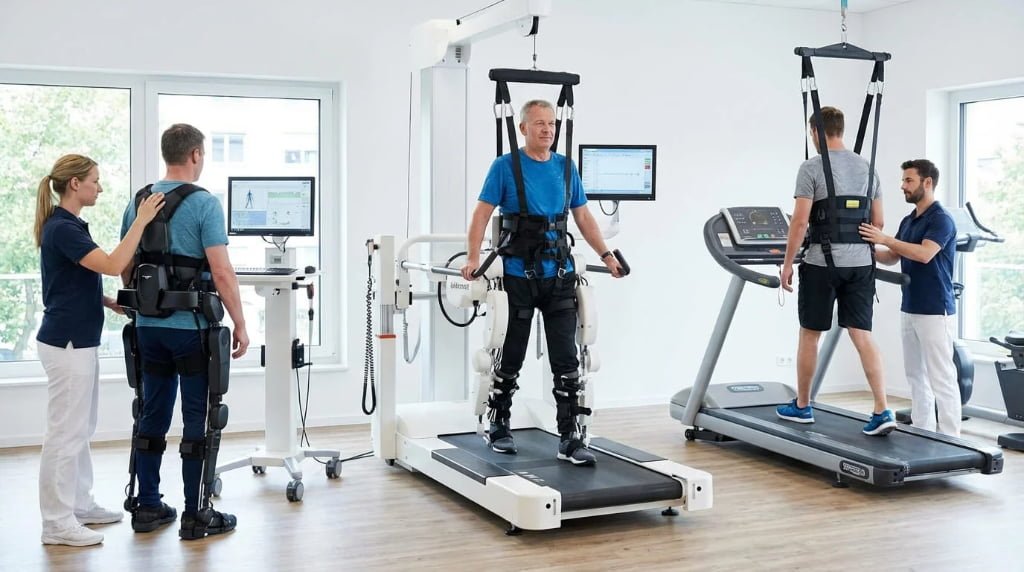
The three main technologies are overground gait exoskeletons, Lokomat-style treadmill robotic systems, and simpler treadmill gait trainers. All support gait rehabilitation, but they differ in movement environment, support method, and clinical workflow.
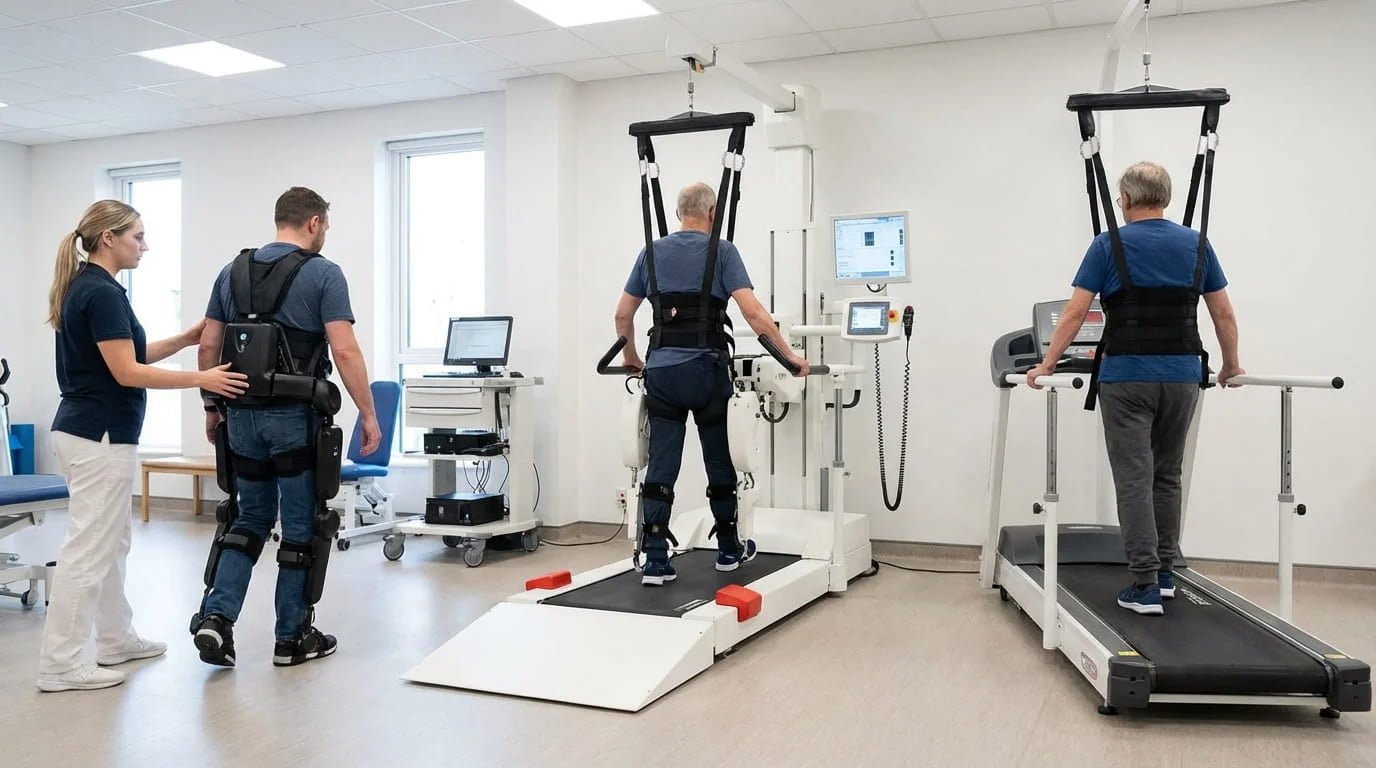
Before I compare them, I want to define them in plain language. That keeps the rest of the article clear.
Overground gait exoskeletons
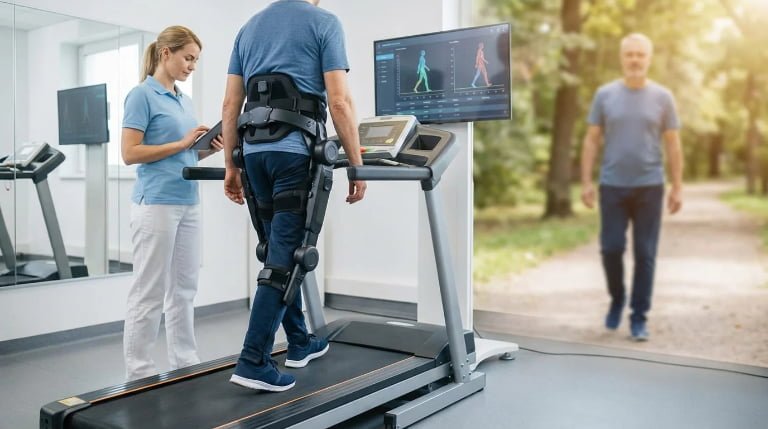
An overground exoskeleton is a wearable powered gait trainer. The patient trains while moving across the floor, usually with therapist supervision and often with a walker or support frame. This format gives a more functional walking context. It can fit neuro rehab, post-surgical re-training in selected cases, and geriatric mobility work under professional supervision.
Lokomat-style treadmill robotic systems
A Lokomat-style system usually combines robotic leg guidance with a treadmill and body-weight support. The patient trains in a fixed station. The system supports repetitive stepping in a highly controlled setup. This type often appeals to larger hospitals that want a dedicated robotic gait suite.
Simpler treadmill gait trainers
A treadmill gait trainer is a broader category. Some systems include body-weight support and therapist-assisted practice without full robotic leg guidance. These systems usually sit below a Lokomat-style platform in complexity and cost. They can still play a strong role in repetitive gait work.
The key point is simple. These are not three versions of the same machine. They are three ways to deliver gait training.
How Do These Systems Compare on Patient Fit, Space, Staffing, Intensity, Cost, and Maintenance?
Most committees do not need more marketing. They need a clean side-by-side comparison they can bring into a purchasing meeting.
Overground exoskeletons usually offer more flexibility and lower entry cost. Lokomat-style systems usually offer the highest structure and the largest footprint. Treadmill gait trainers often sit in the middle, with lower complexity but also less robotic guidance.
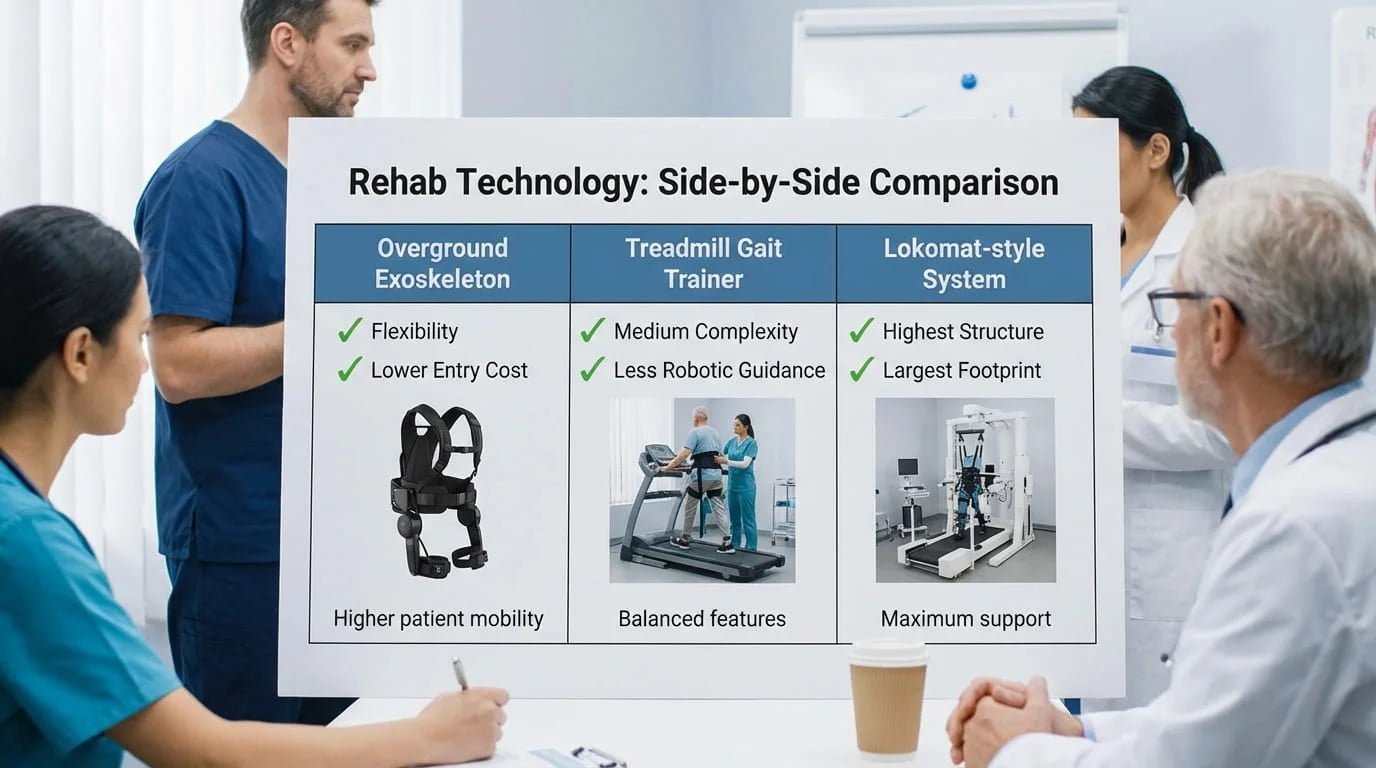
I suggest that every department compare the technologies using six filters: patient population, footprint, staffing, intensity, cost range, and maintenance burden. Those six filters reveal most mismatches early.
| Factor | Overground Gait Exoskeleton | Lokomat-Style Treadmill Robotic System | Treadmill Gait Trainer |
|---|---|---|---|
| Main training environment | Overground walking | Fixed treadmill station | Treadmill station |
| Typical patient fit | Stroke, SCI, neuro rehab, selected post-surgical and geriatric cases | Stroke, SCI, early to mid-stage neuro gait training | Broad gait re-training with less robotic guidance |
| Footprint | Moderate | Large | Moderate to large |
| Staffing model | Therapist-led setup and supervision | Dedicated setup and trained operator workflow | Therapist-led with support depending on system |
| Session style | Functional overground practice | High repetition structured stepping | Repetitive treadmill-based gait work |
| Training intensity | Good intensity with functional context | High repetition in controlled setup | Moderate to high depending on protocol |
| Capital cost range | Starts from about €25,000 FOB for gait trainers, depending on configuration and volume | Often much higher, commonly in premium capital equipment range | Usually below Lokomat-style systems, but varies widely |
| Western brand reference | Comparable systems often €80,000–€100,000 | Often significantly above that range | Varies by support and software level |
| Maintenance burden | Mechanical and electronic service, usually simpler than large fixed robotic stations | Higher due to larger integrated platform | Moderate |
| Installation needs | Lower than fixed robotic room systems | Higher, with room planning needs | Moderate |
These are indicative comparisons, not universal rules. Exact pricing, service burden, and workflow vary by model and region.
From a distributor view, this table also explains commercial reality. A system can look impressive in a demo, but if the hospital cannot staff it or fit it into the ward, the sale will stall.
When Is an Overground Exoskeleton the Best Choice?
Some teams assume overground systems are only for advanced patients. That misses one of their biggest strengths.
An overground exoskeleton is often the best choice when a department wants flexible, functional gait training with a smaller footprint and a more accessible budget. It works well when therapists want robotic support without committing to a large fixed installation.
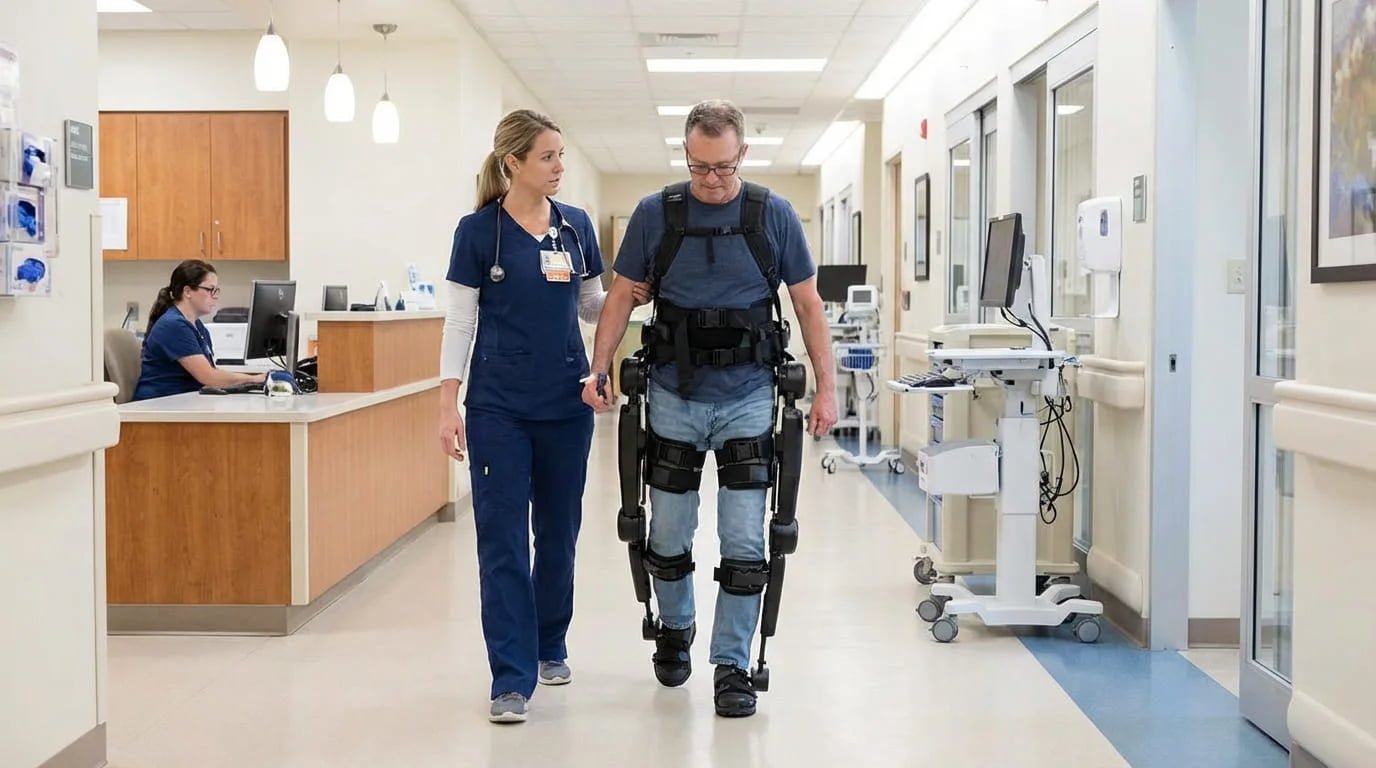
I see strong overground interest in Germany and the Nordic markets because many departments want equipment that can fit existing workflows instead of forcing a full room redesign.
Best-fit clinical scenarios
Overground exoskeleton rehab often makes sense when the department wants to:
- Train walking in a more real movement context
- Use robotic support across more than one ward area
- Reduce manual therapist effort during gait sessions
- Start with a staged technology entry rather than a high-cost fixed system
- Build a visible advanced rehab offering without major construction
Best-fit operational scenarios
This format also suits hospitals that need flexibility.
- Mid-sized rehab departments with limited capital budget
- Centers that treat mixed neuro and mobility cases
- Departments that want demo-to-scale purchasing
- Distributor-led pilot projects in new markets
Why buyers often like the economics
Our team often works with hospitals and distributors that need a practical entry point. FOB prices for gait trainers start at approximately €25,000, depending on configuration and volume. Comparable Western brand pricing often sits around €80,000–€100,000 for similar categories. These are indicative ranges only. Exact pricing depends on package and order scale. For distributors, the margin target often sits at 30–40% if the local launch is structured well.
[PERSONAL STORY PLACEHOLDER: describe a hospital or distributor that first considered a large treadmill robotic system, then shifted to an overground pilot because space and budget were tighter than expected.]
When Is a Lokomat-Style or Treadmill-Based System the Best Choice?
Some buyers dismiss treadmill-based systems as old-fashioned. That is too simple, and it ignores their real strengths.
A Lokomat-style or treadmill-based system is often the best choice when a department wants highly structured repetitive gait sessions in a fixed environment. These systems can suit larger neuro rehab centers with dedicated space, trained staff, and a strong focus on controlled stepping intensity.
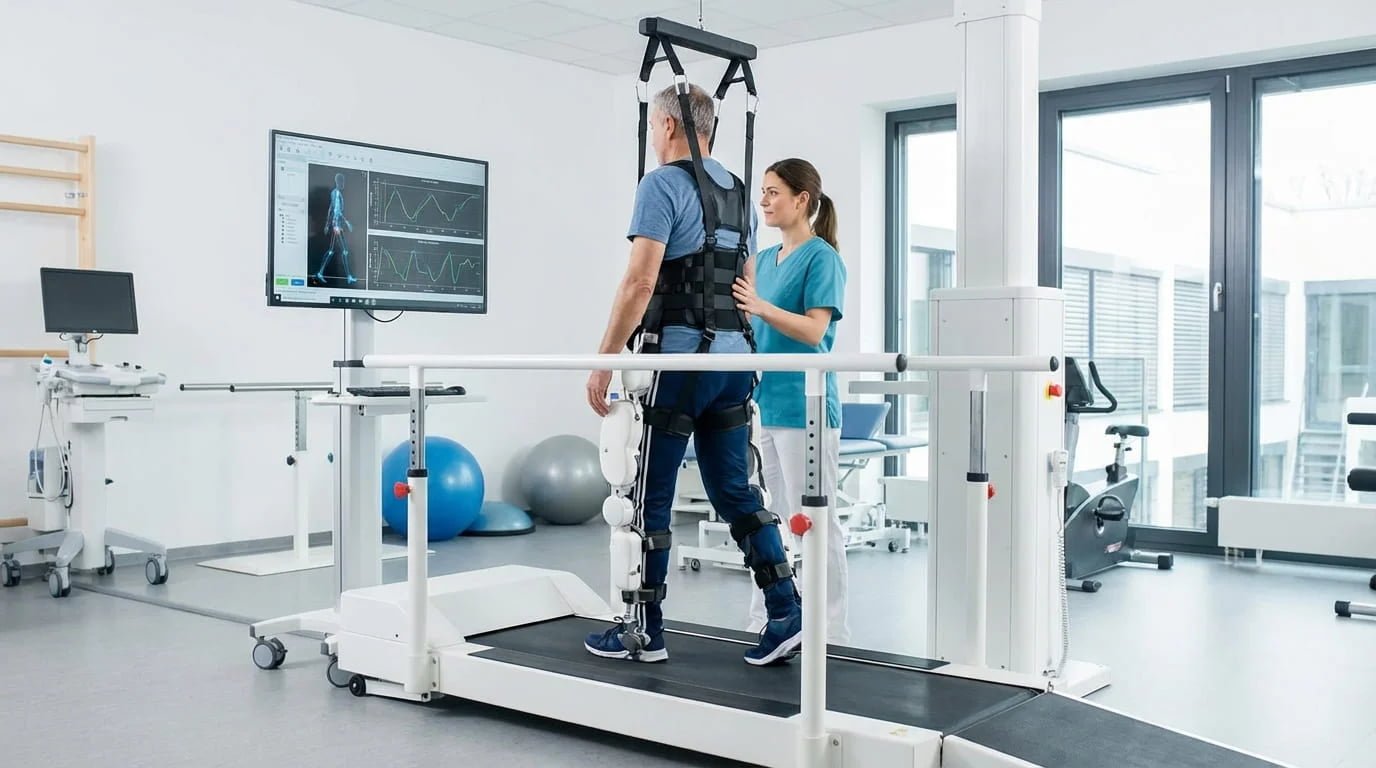
I have seen these systems fit well in flagship rehab centers because they support a very clear operational model. The patient comes to the robotic gait station. The team runs a defined protocol. The system supports repetition and consistency.
Best-fit clinical scenarios
These systems often suit:
- Early to mid-stage neuro gait training
- SCI programs with dedicated robotic rehab pathways
- Large inpatient neuro rehab departments
- Facilities with established body-weight support protocols
Best-fit operational scenarios
They also fit when the department has:
- A dedicated therapy room
- Staff trained for more complex setup
- Enough patient volume to justify a fixed station
- Capital budget for premium rehabilitation technology
Where simpler treadmill gait trainers fit
A standard or semi-advanced treadmill gait trainer can suit departments that want body-weight-supported gait work without investing in a full robotic leg guidance platform. This can be a practical middle route for hospitals that need treadmill repetition but not the highest level of robotic automation.
The trade-off
The main trade-off is flexibility. Fixed systems can be excellent for a defined protocol, but they are less adaptable to space-constrained wards and less mobile inside the department.
Why Are Many Departments Moving Toward Overground-First?
Many rehab teams now want technology that looks closer to real walking and fits everyday practice. That shift is changing purchasing patterns.
Many departments are moving toward overground-first because they want more functional gait context, lower installation burden, and easier budget approval. Overground systems often align better with modern ward layouts and phased purchasing plans.
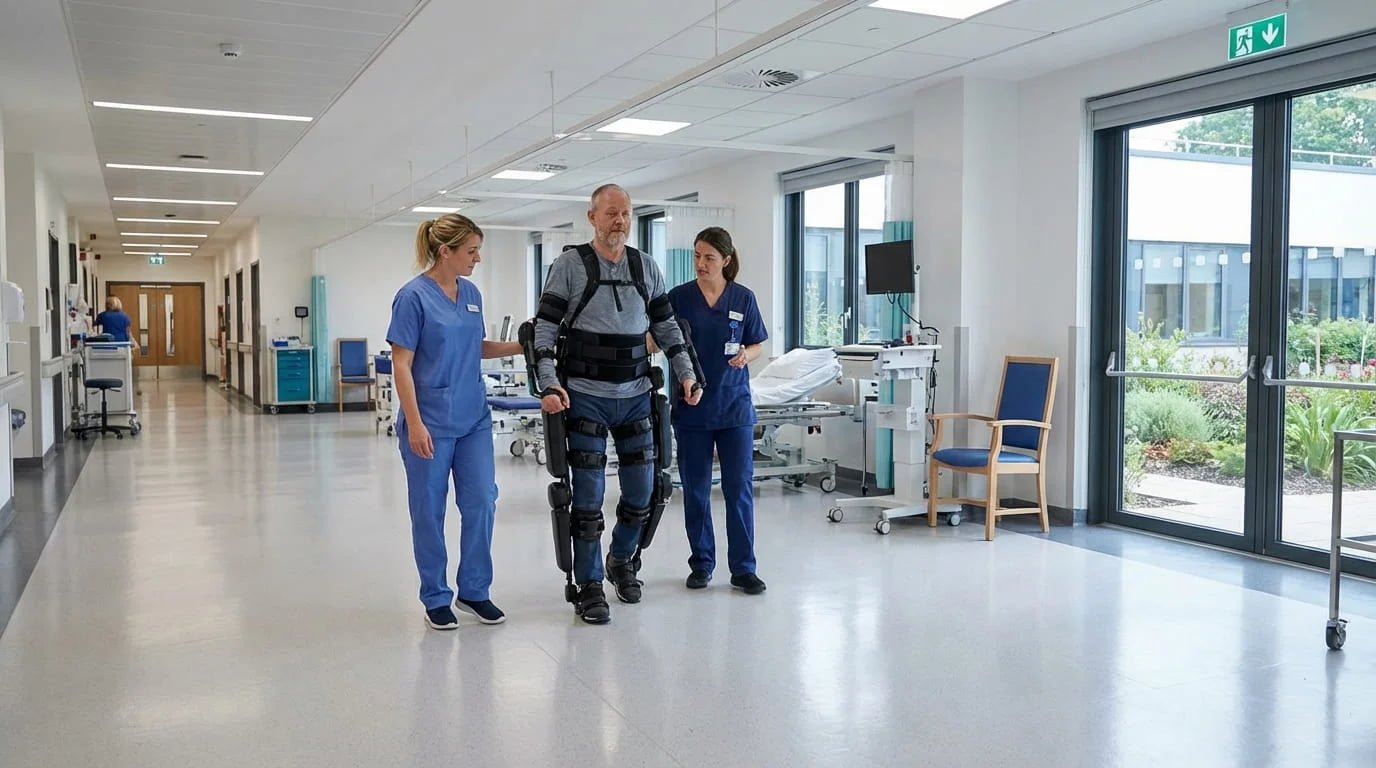
I hear this most often from rehab directors who already understand robotic training. They do not reject treadmill systems. They simply want a device that fits how the ward actually operates.
Functional context matters
Walking across the floor looks and feels closer to real ward mobility than stepping in a fixed treadmill station. That does not make it automatically better for every patient, but it does matter for departments that want visible transfer toward practical mobility work.
Budget pressure matters
Capital committees often hesitate when the equipment requires large room commitment and premium system cost. Overground exoskeletons can lower the first-step barrier.
Staffing pressure matters
Therapy teams are under strain. Systems that reduce manual effort without creating a heavy setup burden often gain faster support from clinicians.
Phased adoption matters
A department can start with one overground unit, build internal experience, and then expand. I see that as a very realistic route for hospitals and distributors entering this category for the first time.
This trend does not mean treadmill systems are fading away. It means buyers are becoming more selective about which robotic format fits their actual care model.
How Should You Match Device Type to Your Ward Size and Patient Mix?
A good comparison still fails if the department asks the wrong planning question. The right question is not “Which technology is best?” It is “Which technology fits our patients and our ward?”
Match device type to ward size, patient flow, therapist capacity, and the stage of gait training you deliver most often. Small and mid-sized wards often prefer overground systems. Larger specialist centers may justify treadmill robotic platforms.

I suggest a simple planning framework before any tender or demo.
Small to mid-sized rehab wards
If your ward has limited dedicated space and mixed patient profiles, an overground gait exoskeleton often makes the most sense. It can support neuro rehab and broader mobility pathways without needing a separate robotic room.
Large neuro rehab centers
If your center has strong patient volume in stroke and SCI, and if your team already runs high-intensity treadmill-based protocols, a Lokomat-style setup may justify itself.
Mixed outpatient and inpatient settings
A treadmill gait trainer or overground system may fit better than a premium fixed robotic platform. Flexibility tends to matter more when patient turnover and treatment goals vary widely.
| Department profile | Often the best fit | Why |
|---|---|---|
| Community rehab ward | Overground exoskeleton | Flexible use, smaller footprint |
| Specialist neuro center | Lokomat-style system | Dedicated high-structure robotic workflow |
| General hospital rehab unit | Overground or treadmill gait trainer | Budget and space usually drive the choice |
| Distributor pilot market | Overground exoskeleton | Easier entry, easier demo, broader buyer interest |
[PERSONAL STORY PLACEHOLDER: describe a technical evaluation where ward size and patient turnover changed the recommended system type.]
Why Should You Consider a Combined Pathway Instead of a Single Device?
Some departments search for one device that does everything. That search often ends in compromise.
A combined pathway can make more sense than a single device because different patients need different training formats at different stages. Treadmill-based structure and overground functional practice can complement each other rather than compete.
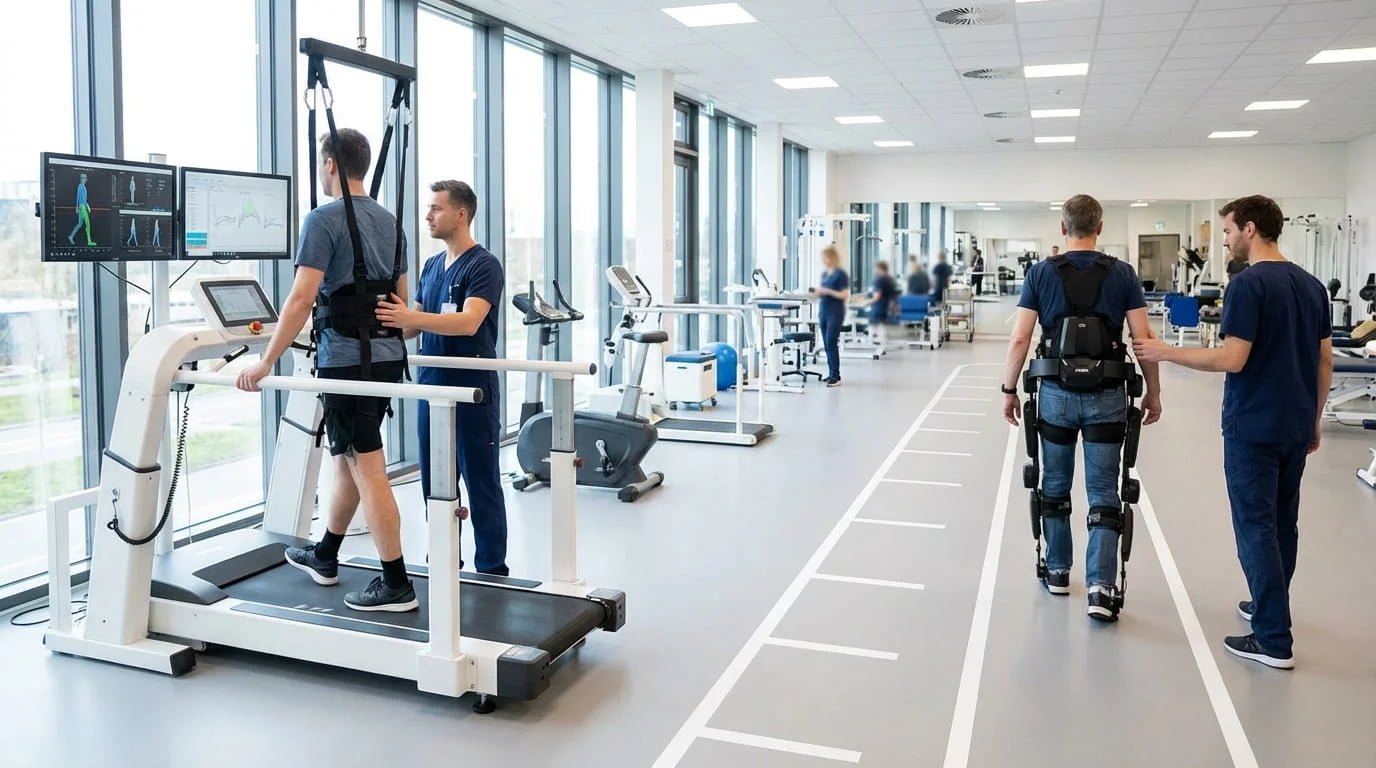
I think this is where the market is becoming more mature. Strong departments no longer ask which single machine wins. They ask how each technology fits along the rehab journey.
A staged rehab logic
A patient may begin with heavier support and more controlled stepping. Later, the same patient may benefit from more functional overground practice. These are different training tasks.
A staged investment logic
A hospital does not need to buy every system at once. Some departments start with overground because it is easier to launch. Later, they add treadmill-based capacity if patient volume and budget justify it.
A distributor logic
For distributors, a combined portfolio approach is often stronger than a single flagship product. That is one reason we focus on a broader lower-limb pathway, not only one machine category.
At GaitExo, we support hospitals and distributors with Gait Training Exoskeleton solutions, plus adjacent lower-limb categories such as Hip Assist Exoskeleton and Ankle Assist & AFO Solutions. We act as the trading and branding partner, not the manufacturer. Our manufacturing partners include EULON (优龙机器人). We provide export documentation, English technical files, and planning support. Standard lead time is 4–8 weeks from order confirmation. We usually work on FOB or CIF terms.
I also need to state the compliance boundary clearly. GaitExo products are not currently CE marked as medical devices under EU MDR. The importer or distributor remains the local responsible party for medical device registration decisions. Our team can help with documentation planning and HS 8479.89 classification strategy, but we do not replace local legal responsibility.
Choose the device type that fits your real patients, real staff, and real space. In many departments, the best answer is not one machine. It is a smart pathway.