
Long walks become harder before people admit they are slowing down. That doubt quietly shrinks weekends, trips, and family plans. We built this guide to explain practical help.
GaitExo Pro V1 is a consumer-grade hip exoskeleton that supports walking by assisting hip movement. We see the clearest value on climbs, stairs, and the tired return leg of longer walks. It helps people walk longer, not race faster.
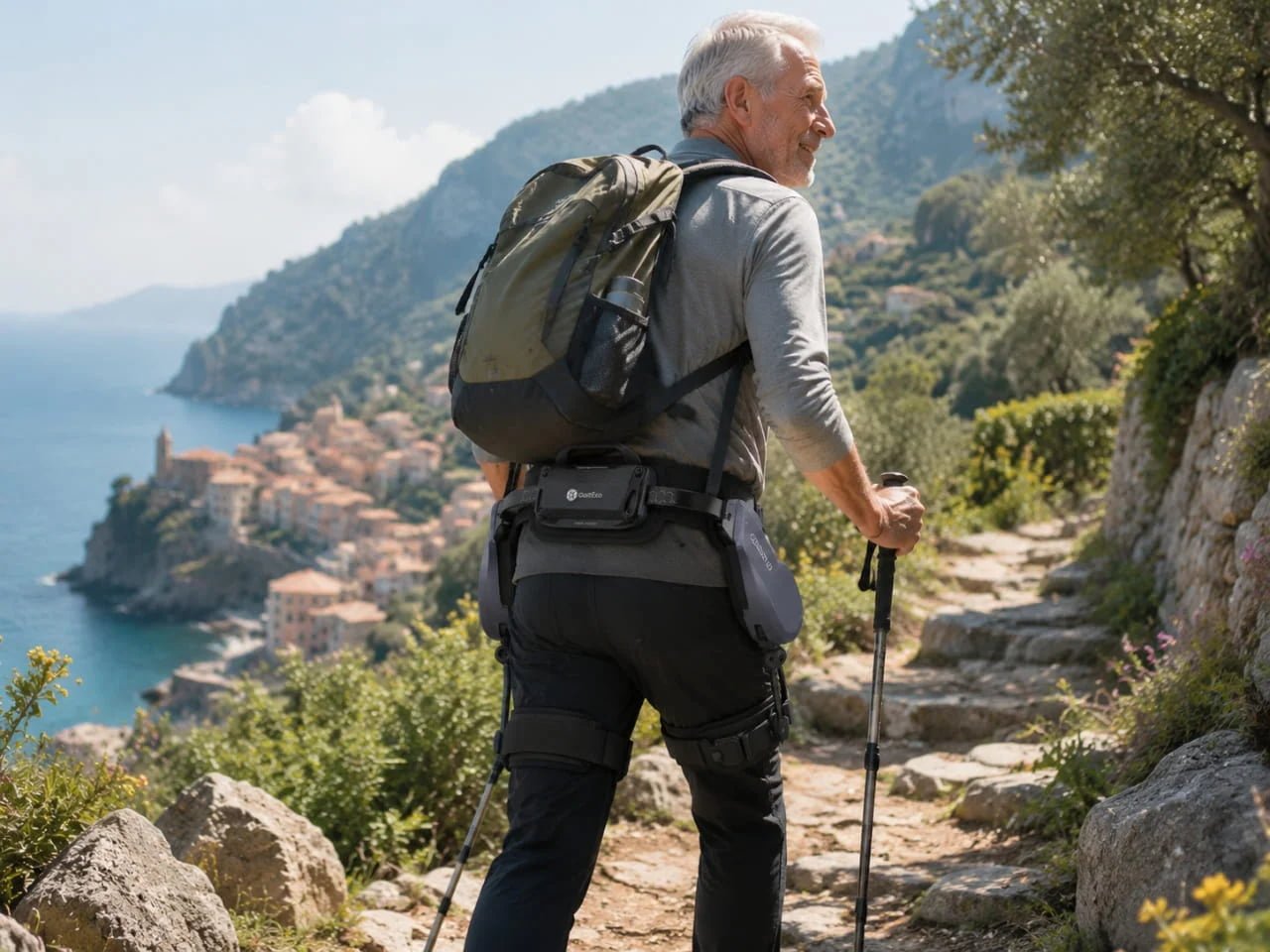
I have spent more than 20 years working with overseas partners, and I have learned one thing repeatedly. People do not buy walking support because a brochure looks impressive. People buy it because one real moment changes how they see their own limits. The name GaitExo fits this work because "gait" points to walking pattern, and "exo" points to exoskeleton technology. I will explain where the device helps, where it does not, and why a shop-floor test often gives the wrong answer.
What Does a Hip Exoskeleton Actually Do, and What Does It Not Do?
Many people hear "exoskeleton" and imagine a robot doing the walking. That image creates fear and false hope. We need a simpler explanation.
A hip exoskeleton assists hip movement during walking. I often describe it as an e-bike idea for your legs, with one key difference. An e-bike helps you ride faster. A walking exoskeleton helps you keep going longer.
The e-bike comparison helps, but only halfway
I use the e-bike comparison because most people understand assisted effort. You still pedal an e-bike. You still steer it. You still decide where to go. The motor adds support when the route becomes harder.
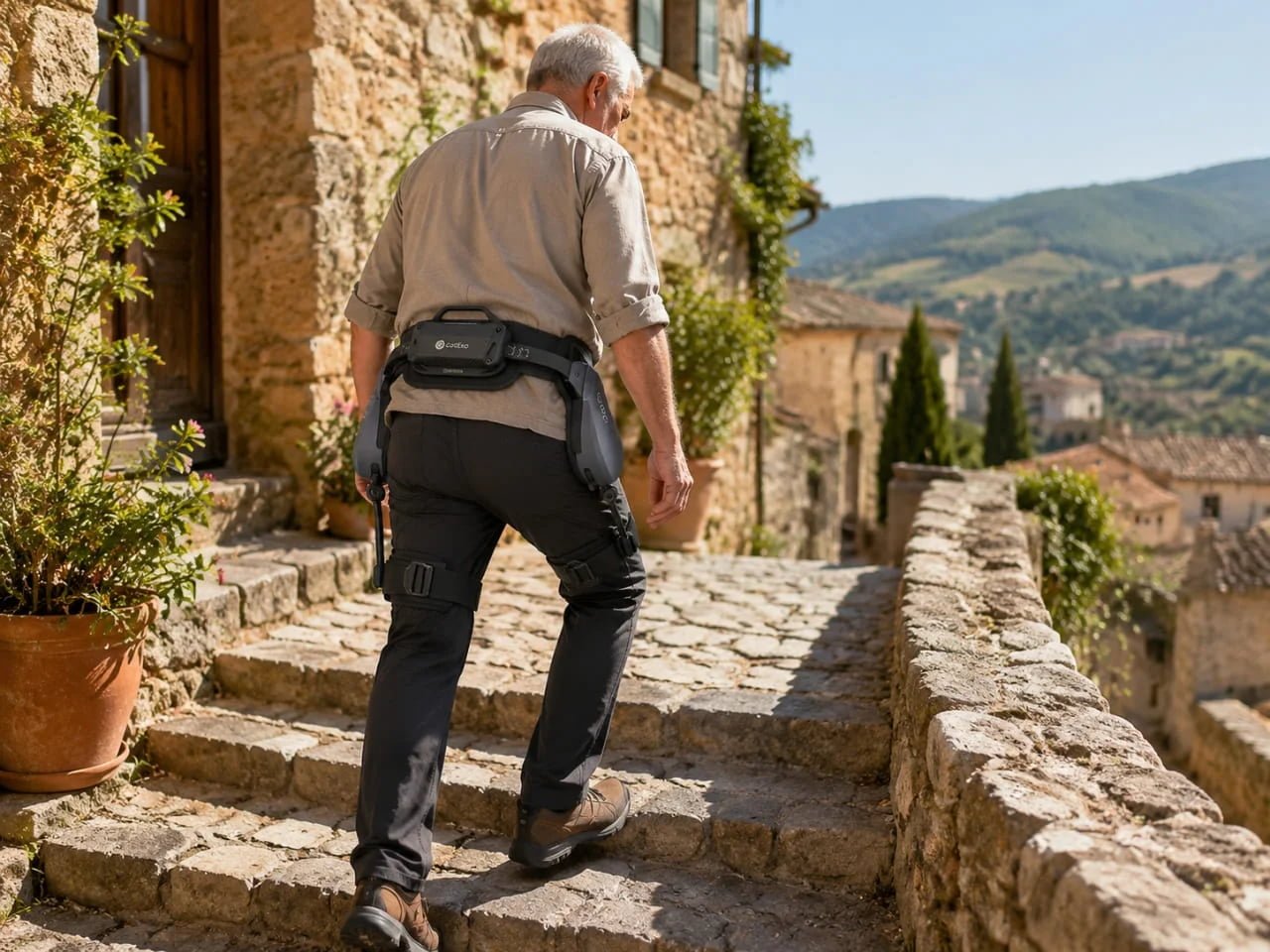
A hip exoskeleton works in a similar emotional category. It does not replace your body. It supports part of the walking motion, especially around the hips. That support can feel more useful when your legs start to work harder.
The difference matters. An e-bike often changes speed. A walking exoskeleton usually changes endurance. We do not want people to think they will suddenly become mountain athletes. We want people to understand that the device may help them stay with the walk when the second half becomes uncertain.
Where users usually notice the difference
In our discussions with outdoor users, care homes, and European partners, I hear the same pattern. Short flat walking often produces a mild reaction. Hills produce a stronger reaction. Stairs produce a clearer reaction. Long returns after lunch often produce the most honest reaction.
That last moment matters. Many people do not fear the first kilometre. They fear the return after they already feel tired. That is where assistance becomes less about technology and more about confidence.
What the device does not do
The device does not solve every walking problem. It adds approx. 2.2 kg to the body. Some people need practice before they fit it naturally. People with major balance problems should not treat it as a safety device.
GaitExo Pro V1 is not classified as a medical device. If you have a medical condition affecting mobility, consult a doctor before use. The device is CE certified under EU Machinery Directive 2006/42/EC, certified by ECM in Bologna, Italy, Certificate No. 0P250922.CERCT87. This is a Machinery Directive certification, not a medical device certification under EU MDR 2017/745.
Use within your own limits. Follow the user manual carefully. Stop if you feel pain, dizziness, numbness, or unstable steps. Consult a doctor if you have a medical condition affecting mobility.
Why Does the Flat-Ground Test Undersell the Device?
A showroom floor feels safe, but it hides the real problem. People test support where they need support least. That mistake causes wrong conclusions.
A flat-ground test often makes a hip exoskeleton feel less useful than it is. The real value appears near the personal threshold, where hills, stairs, distance, or fatigue start to change your walking choices.
The test location changes the answer
I have watched people try assisted walking technology on clean indoor floors. They walk ten metres. They turn around. They say, "I feel something, but not much." That reaction makes sense. The body does not ask for much help on easy ground.
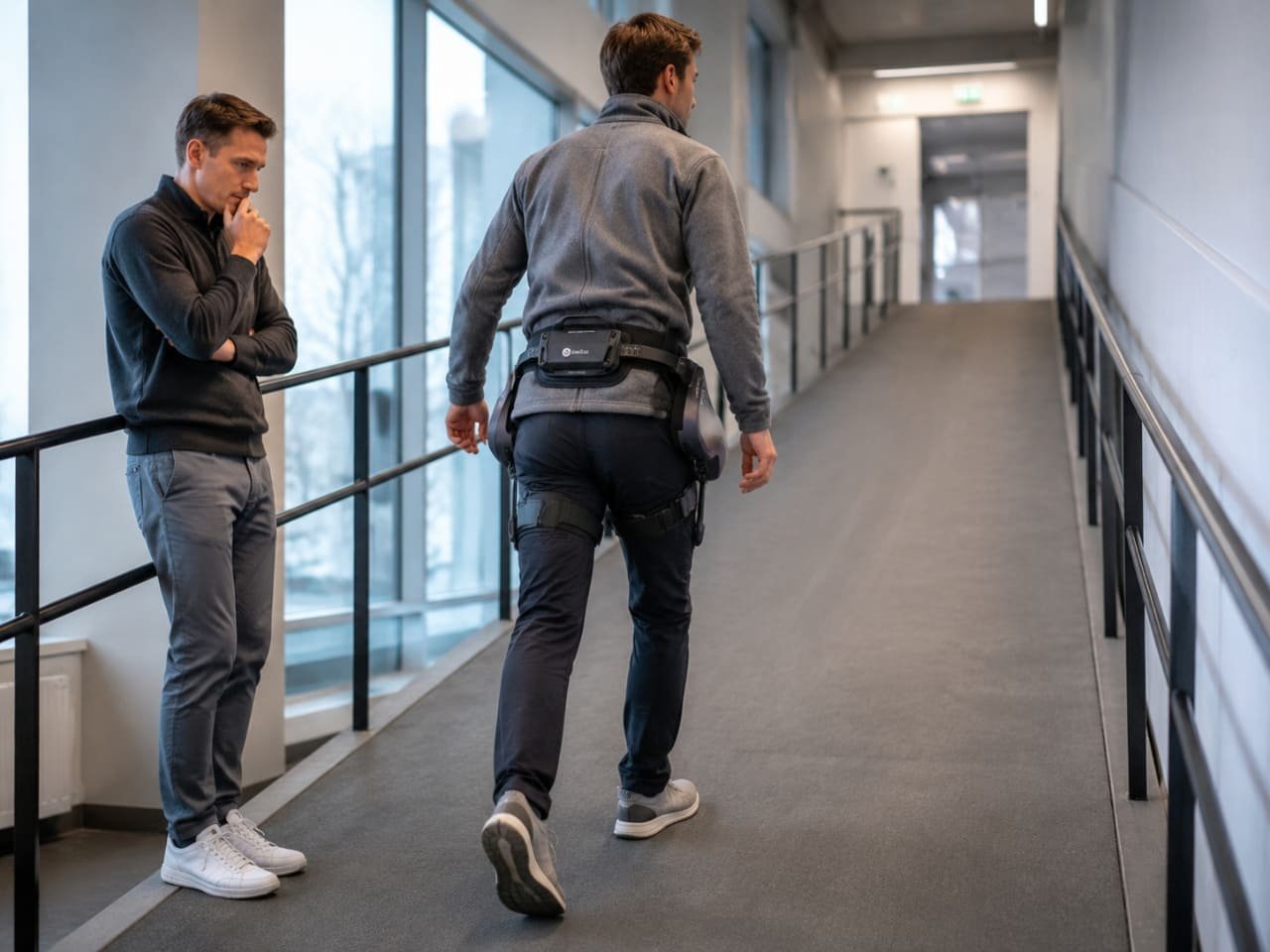
Then the same person steps onto a ramp. Their posture changes. Their attention changes. Their face often changes before their words do.
I remember one demo with a man who had already decided, almost politely, that the device was not for him. He walked across the indoor floor, turned around, and gave me the look I have seen many times. He said, "I understand it, but I do not feel enough difference."
I did not argue with him. The floor was smooth, flat, and short. His body had no real reason to ask for help. I asked him to try one more thing before taking it off. We walked to a small ramp near the entrance.
The first few steps changed the conversation. He did not say anything at first. His shoulders came forward slightly, then relaxed. His eyes moved from the floor to the top of the ramp. Halfway up, he slowed down, touched the handrail, and then smiled.
He said, "Now I understand where it starts."
That sentence stayed with me because it explained the product better than any brochure. GaitExo combines the ideas of gait, meaning walking pattern, and exo, meaning exoskeleton, but the real meaning appears when walking becomes demanding. On flat ground, assistance can feel quiet. On a slope, the same assistance can feel personal.
After the ramp, he asked a different question. He no longer asked whether the device was noticeable. He asked whether it could help on the hill behind his house. That shift told me the demo had finally reached the right place.
That is the flat-ground test problem. The test does not match the use case. Most active adults do not worry about the first 50 metres inside a shop. They worry about the slope after the car park. They worry about the stairs to the hotel room. They worry about whether they will slow down the group on the way back.
The threshold is the real use case
I call this the "critical point." It is the moment when a person starts to negotiate with themselves.
A person may think, "I can still go, but should I?" A person may look at the route and choose the shorter path. A person may stop joining family walks because they do not want everyone waiting. That quiet retreat often starts years before the person says, "I have a mobility problem."
This is why some people feel underwhelmed during a short test but later dislike leaving the device at home. They do not love the device because it makes easy walking dramatic. They value it because it changes the hard part of the day.
| Walking situation | What many first-time users feel | Why the feeling changes |
|---|---|---|
| Short flat floor | Mild assistance | The body has low demand, so the support feels less obvious |
| Gentle slope | Clearer support | The hips work harder, so assistance becomes easier to notice |
| Steeper climb | Stronger support | Fatigue builds faster, and support feels more relevant |
| Stairs | Very clear difference for some users | The movement asks more from hip flexion and control |
| Long return leg | Often the most meaningful moment | The user feels the difference when tired, not when fresh |
Why retailers and families should test differently
I encourage partners and families to stop relying only on flat demonstrations. A better test includes a ramp, a staircase, and a short repeated loop. The goal is not to exhaust the person. The goal is to reveal whether the device helps at the point where the person normally starts to slow down.
This matters in Italy, especially in places like Bergamo, Siena, Genova, and many hill towns where beautiful walking rarely stays flat. It also matters for travel days, because museums, train stations, old streets, and hotel stairs create small loads that add up.
Who Gets the Most Out of It?
The strongest walker does not always need assistance. The weakest walker may need medical support first. The best fit often sits between those two groups.
We see the strongest fit among people who still want active days but now question the second half of the route. They can walk, but they want support before hesitation becomes withdrawal.
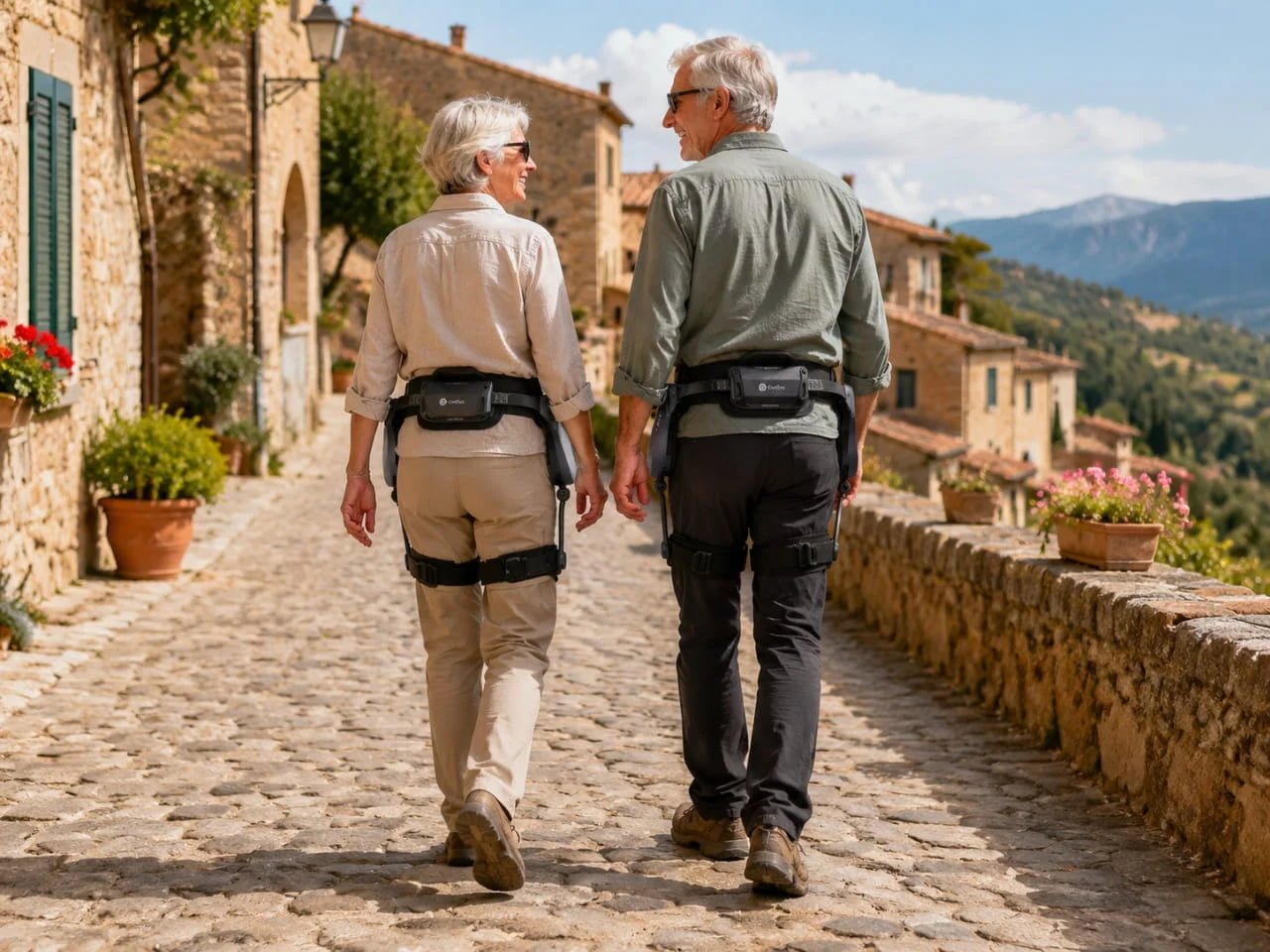
The best user often says, "I can still do it, but..."
That phrase tells me more than a fitness test. A person may still walk well on paper. They may still travel. They may still join family outings. But they start checking the elevation profile. They start avoiding routes with too many steps. They start saying yes less often.
The real pain point is not losing walking ability overnight. The real pain point is the voluntary exit. People stop joining activities before others notice. They choose the café instead of the viewpoint. They wait at the bottom instead of climbing with the group. They protect their dignity by pretending they prefer the easier option.
A walking exoskeleton can help some people stay involved longer. That involvement matters because identity changes slowly. A hiker wants to remain a hiker. A traveller wants to remain curious. A grandparent wants to walk beside family, not behind them.
Good-fit scenarios we hear often
I see several groups ask the right questions early.
Weekend hikers often want help on climbs and returns. They do not want a device for a supermarket aisle. They want support on the part of the trail where their pace drops.
Frequent travellers ask about long city days. They worry less about one street and more about six hours of walking through Rome, Florence, Vienna, or Munich. They know fatigue makes the last museum feel harder than the first.
Active adults over 50 often ask the most practical questions. They ask whether the device feels strange. They ask whether other people stare. They ask whether the effort of wearing it pays back during the day.
Adult children ask different questions. They want to know whether a parent can use it safely and consistently. I tell them to test donning, stairs, and stopping. A device that helps only after complicated setup will not become part of daily life.
Who should be careful
A person with serious balance issues needs professional advice before considering any walking support. A person with pain, dizziness, numbness, or unstable steps should stop use and seek medical guidance. A person who expects the device to replace training, rest, or sensible route planning will misunderstand the product.
Our manufacturing partner EULON builds the device under its own quality systems. We at GaitExo coordinate configuration, branding, documentation, export, and partner support. That role matters because overseas users need clear guidance, not just hardware shipment.
Standard Pro V1 or Pro V1 Plus Adventure Kit?
Battery planning can ruin confidence before the walk starts. People do not only fear empty batteries. They fear not knowing how to plan.
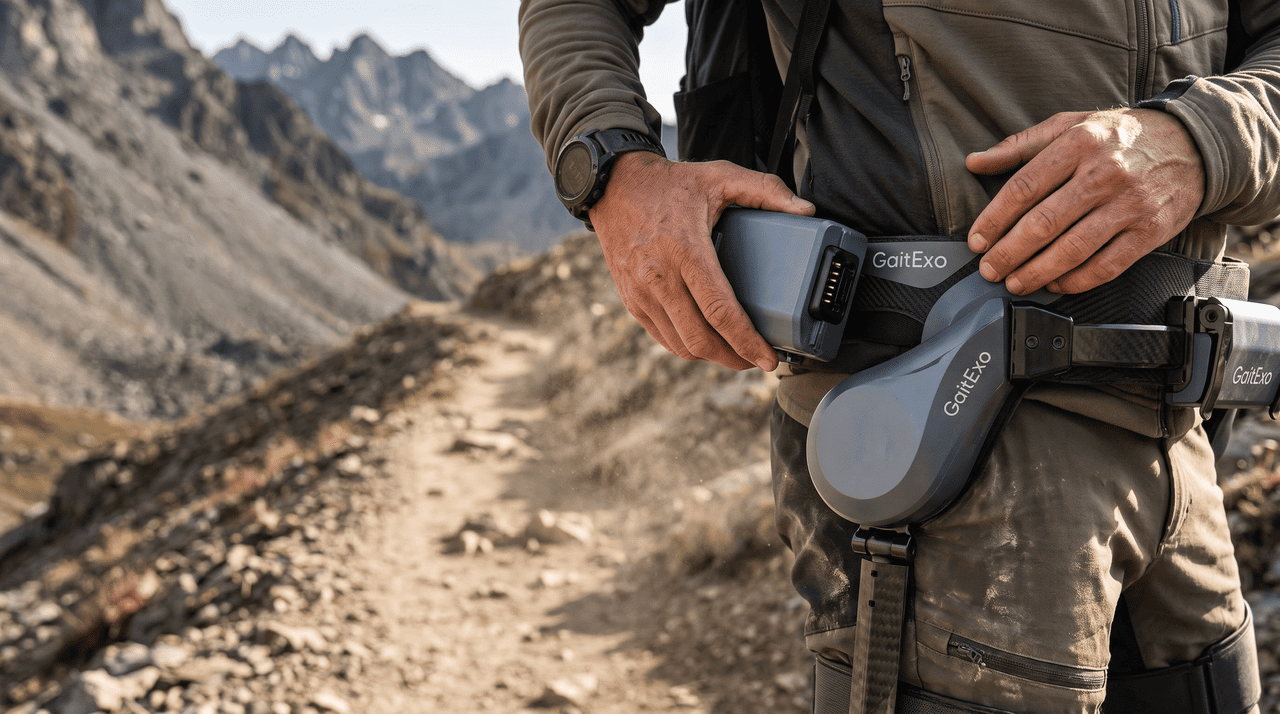
The standard setup suits shorter or moderate outings. The Adventure Kit adds one extra hot-swap battery pack, a weatherproof outdoor carry bag, and extended leg straps for longer outdoor days and travel use.
Battery anxiety is really planning anxiety
I have seen people overfocus on battery numbers. The confirmed endurance is approx. 2–4 hours per battery pack, depending on conditions and use. That range matters because terrain, assistance level, temperature, and walking pattern all affect practical use.
The deeper issue is not only capacity. The deeper issue is uncertainty. People want to know whether they can start a walk without calculating every minute. The hot-swap system helps because the device does not power down during a battery swap. That means the user can change the pack during an outdoor day without turning the whole experience into a technical stop.
The Adventure Kit exists for that reason. It is not a fashion bundle. It supports longer planning. It includes 1x extra hot-swap battery pack, 1x weatherproof outdoor carry bag, and 1x extended leg strap set. The confirmed dual-battery total endurance should be checked on the product page or requested from us before publishing route plans.
| Setup | Best fit | Practical advantage | Honest limitation |
|---|---|---|---|
| Standard setup | Shorter walks, local outings, moderate use | Simpler start and lower accessory load | The user must plan around one battery pack |
| Device plus Adventure Kit | Longer outdoor days, mountain routes, travel days | Extra pack and carry bag reduce planning stress | The user carries more equipment |
| Experience provider setup | Guided walks, outdoor rental trials, wellness demos | Staff can manage swaps and route planning | The provider must train staff carefully |
One battery can be enough, but not for every plan
I do not tell people to buy accessories automatically. A person who walks locally for shorter sessions may not need the extra pack. A person who wants mountain days in the Dolomites or multi-stop travel days may value the extra planning margin.
The carry bag also matters more than many people expect. Outdoor users do not want loose parts in a normal backpack. They want a clear place for the spare pack and straps. Small details decide whether equipment gets used or stays at home.
Assistance level affects the day
The device offers 6 adjustable assistance levels. Higher support can feel better on demanding climbs, but it can also affect how a person plans energy and battery use. I advise users to start conservatively, learn the feeling, and increase support only when the route asks for it.
That habit creates better judgement. A user who understands their own routes will make better choices than a user who treats assistance like an on-off switch.
Who Probably Does Not Need This Yet?
Some readers want permission not to buy. I respect that. The wrong user will not become happy because we push harder.
You probably do not need this yet if you only walk short flat routes, feel fully confident on hills and stairs, or feel strongly uncomfortable with visible walking assistance.

Short flat walking may not justify the device
If your normal walking means ten minutes on level pavement, you may not feel enough benefit. The device helps most when walking demand rises. A flat route with no fatigue may not create that demand.
This is not a flaw. This is a matching issue. I would rather tell a reader the truth than let them expect a dramatic feeling in the easiest possible use case.
Strong fitness changes the value equation
A very fit user may still enjoy assisted walking technology, but they may not need it. Some strong hikers ask about the device because they like equipment. I understand that curiosity. Outdoor people often enjoy useful gear.
But this device makes the most sense when support protects participation. If a person already climbs, descends, and returns without concern, the value may feel limited. That person may want to wait until the need becomes clearer.
Psychological readiness matters
Some people are physically ready for support but emotionally not ready. I take that seriously. A walking aid can feel like a label. Even a modern wearable device can make a person ask, "What will people think?"
I have seen this change when the person connects the device with freedom instead of decline. But no one should force that shift. The best moment comes when the person says, "I want to keep doing this," more strongly than they say, "I do not want help."
I remember one conversation with an active older user who still walked every weekend with his family. He did not describe himself as weak, and I did not see him that way. His concern was not only physical. His first sentence to me was, "I do not want to look like someone who needs help."
We talked for a while before he even tried the device. He told me that he had started choosing shorter routes when his children planned family walks. He still joined them, but he quietly avoided the hill sections and waited near the café more often. That mattered to me because walking support is not only about distance. It is also about dignity, confidence, and staying part of normal life 2.
Then I asked him one question: "Would you rather people see a device for ten seconds, or would you rather miss the walk completely?" He did not answer immediately. He looked at his daughter, and she said, "We do not care what you wear. We care that you come with us."
That was the moment the conversation changed. He stopped talking about the device as a sign of decline. He started talking about Sunday walks, stairs in old towns, and whether he could manage the return path after lunch. Those are exactly the kinds of daily and outdoor situations where hip assistance can feel more meaningful, including walking, climbing, stairs, hiking, and travel routes 2.
I did not push him to decide that day. I told him that the right reason to use support is not fear. The right reason is participation. If a device helps someone protect walking endurance and keep doing the activities that still matter to them, then it becomes less like a label and more like equipment.
Safety comes before ambition
People should not use the device to push through unsafe symptoms. Use within your own limits. Follow the user manual carefully. Stop if you feel pain, dizziness, numbness, or unstable steps. Consult a doctor if you have a medical condition affecting mobility.
Care homes, wellness centres, and outdoor experience providers should also screen users carefully. A supervised trial on mixed terrain tells more than a quick sales conversation. That approach protects trust, and it protects the user.
GaitExo makes most sense at the moment walking starts to shrink your choices. The device does not replace judgement. It can help protect participation.
full product details — Visit this page if you want confirmed specifications, certification details, and practical setup information.
walking support for active seniors — Visit this page if you are comparing options for yourself, a parent, or an older family member.
outdoor walking and hiking use — Visit this page if your main question involves hills, trails, stairs, and longer outdoor days.